Key takeaways NAD+ (nicotinamide adenine dinucleotide) is a coenzyme that helps move electrons for energy production and serves as a substrate for sirtuins and DNA-repair enzymes called PARPs. The popular “NAD+ drops about 50% with age” claim traces to worms and aged mice; a 2026 Nature Metabolism study found whole-blood NAD+ essentially stable across age […]
Key takeaways There is no FDA-approved NAD+ drug product, so there is no official or recommended NAD+ dosage. Injectable NAD+ is compounded, prescription-only, and has not been evaluated by the FDA for safety, quality, or efficacy. Any IV, subcutaneous, or intramuscular NAD injection dosage you see is provider-determined and individualized, drawn from compounding-practice reports, not […]
Key takeaways Glutathione side effects depend heavily on the route. Oral glutathione has been generally well tolerated in short human trials (mostly mild bloating or nausea), while injectable/IV glutathione carries materially higher, better-documented risks, including endotoxin reactions, anaphylaxis, and Stevens–Johnson syndrome. There is no FDA-approved glutathione drug product in the United States for any indication. […]
Key takeaways Injectable glutathione is a compounded, prescription-only product. It is not FDA-approved, and the FDA has not evaluated compounded glutathione injections for safety, quality, or efficacy. The clinical evidence in humans is limited, mixed, and condition-specific. A Parkinson’s pilot trial showed no statistically significant motor benefit; a cisplatin-neuropathy trial showed benefit that does not […]
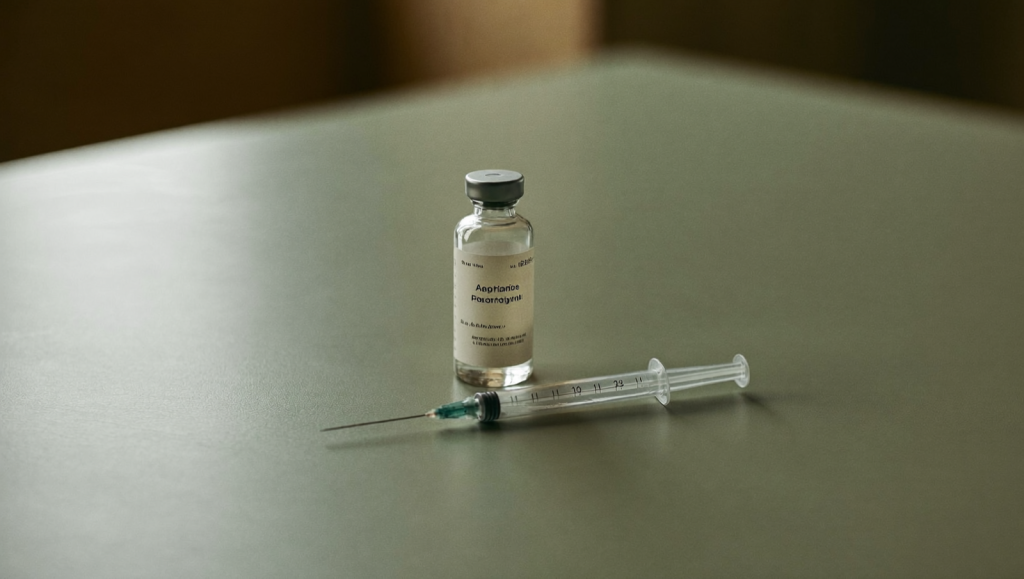
Key takeaways The most common NAD+ injection side effects are infusion-related and appear to be tied to how fast it is given: flushing or warmth, nausea, vomiting, abdominal cramping, diarrhea, a racing heartbeat, and chest pressure that tend to ease when the drip is slowed or stopped. The human evidence base is small, mixed, and […]

Key takeaways The biggest practical difference is logistics: a NAD+ IV infusion is typically run slowly over roughly 2-4 hours in a clinic, while a compounded NAD+ injection takes minutes and can often be self-administered at home. NAD+ is not FDA-approved for any route (IV, subcutaneous, intramuscular, or oral). The product used clinically is compounded […]

Key takeaways Glutathione is one of the body’s most abundant intracellular antioxidants and a cofactor in liver Phase II detoxification, which is why it is often called a “master antioxidant,” though it is not the only or strongest one. Oral glutathione appears to be poorly and unreliably absorbed from single doses, with a single-dose animal […]

Key takeaways NAD+ is a coenzyme central to cellular energy and repair, but a large 2026 human study found that whole-blood NAD+ does not meaningfully decline with age, which challenges the popular claim that NAD+ falls by roughly half as we get older. Injectable and IV NAD+ are compounded products. They are not FDA-approved, their […]