
NAD+ Side Effects and Safety: What to Know

 Medically reviewed by Diana Medina, PA-C, board-certified Physician Associate · Last reviewed August 4, 2026
Key takeaways
- The most common NAD+ injection side effects are infusion-related and appear to be tied to how fast it is given: flushing or warmth, nausea, vomiting, abdominal cramping, diarrhea, a racing heartbeat, and chest pressure that tend to ease when the drip is slowed or stopped.
- The human evidence base is small, mixed, and at risk of bias. The cleanest comparative data come from a 2024 placebo-controlled pilot (a preprint), a 2026 retrospective chart review of just 6 NAD+ IV recipients, and a slow 6-hour infusion study in 11 healthy men (8 receiving NAD+) that recorded no adverse events.
- The most serious, FDA-documented risk is not the molecule but product quality. The FDA has flagged food-grade NAD+ used in sterile compounding and reports of severe chills, shaking, and vomiting consistent with endotoxin contamination; one NAD+-for-injection lot was recalled and classified Class I in October 2025.
- Compounded NAD+ injection is prescription-only and not FDA-approved; the FDA has not evaluated it for safety, quality, or efficacy. Sourcing, sterility, and a licensed provider matter as much as the dose.
NAD injection side effects are mostly infusion-related and appear to depend heavily on how quickly the dose is delivered: when NAD+ is given fast, people frequently report flushing, nausea, vomiting, abdominal cramping, diarrhea, a fast heartbeat, and chest pressure, and these sensations tend to settle once the infusion is slowed or finished. A separate and arguably more serious category of risk has nothing to do with the molecule itself and everything to do with product quality, including contamination of compounded products. This article walks through both, sticking closely to what the limited human data actually show. It is educational information, not medical advice.
What are the most common NAD+ side effects?
The clearest picture of acute, infusion-related effects comes from a small 2026 retrospective chart review at a commercial wellness clinic. In that review, all six NAD+ IV recipients reported moderate-to-severe abdominal cramping, diarrhea, nausea, vomiting, increased heart rate, throat pain, congestion, and chest pressure during the infusion. Notably, these experiences ceased immediately when the infusion was completed (Frontiers in Aging, 2026). This was a real-world, uncontrolled chart review of just n=6 NAD+ clients (alongside 8 nicotinamide riboside recipients), with a patient-controlled drip rate, so it should not be read as a definitive incidence rate for everyone.
Compounding-pharmacy labeling lists a generally milder set of commonly reported reactions: fatigue, nausea, headache, lightheadedness, warmth or flushing, and minor injection-site irritation (Empower Pharmacy). These are label- and provider-based descriptions rather than figures from a controlled trial.
| Reported effect | Where it comes from | Population / study type |
|---|---|---|
| Cramping, diarrhea, nausea, vomiting, racing heart, throat pain, chest pressure during infusion | Frontiers in Aging (2026) | Retrospective chart review, n=6 NAD+ IV, self-paced rate |
| Nausea, diarrhea, muscle cramping, chest pain, dizziness (NAD+ IV arm) | medRxiv preprint (2024) | Randomized, double-blind, placebo-controlled pilot; 500 mg single IV dose (not yet peer-reviewed) |
| Fatigue, nausea, headache, lightheadedness, warmth/flushing, injection-site irritation | Empower Pharmacy label | Compounding-pharmacy product labeling |
| No adverse events recorded | Grant et al. (2019) | Pilot, 11 healthy men (8 receiving NAD+, 3 saline controls), 750 mg over 6 hours (3 micromol/min) |
Why does infusion rate matter so much?
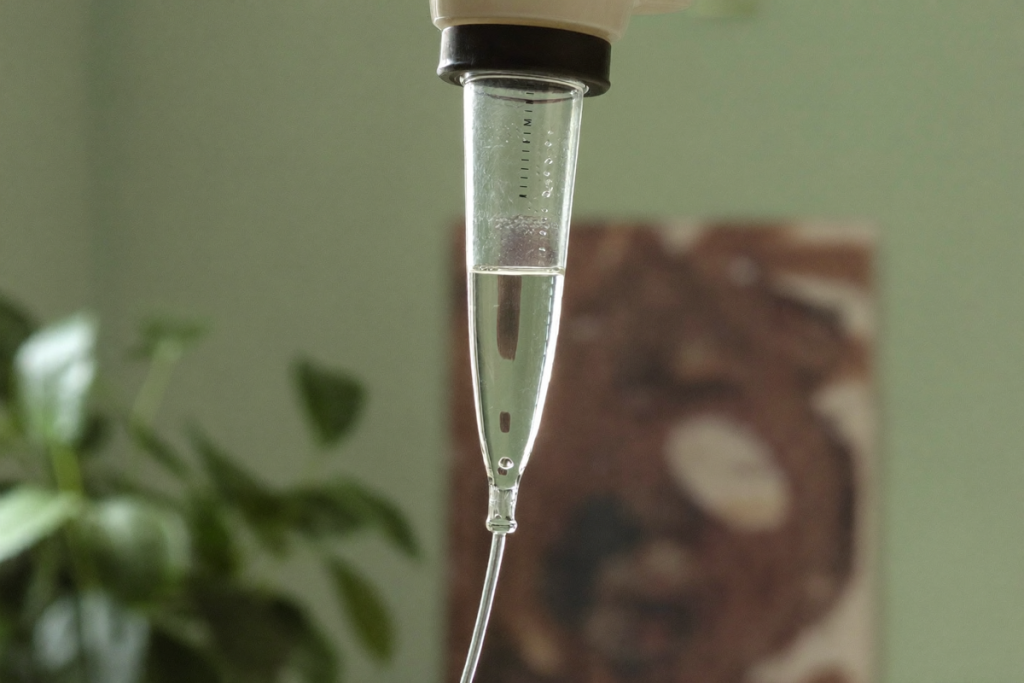
The pattern across these small studies suggests tolerability is strongly tied to speed. In a 2019 pilot of 11 healthy men (8 receiving NAD+, 3 saline controls), a slow 6-hour IV infusion of 750 mg NAD+ (3 micromol/min) produced no adverse events in either the NAD+ or saline groups, and plasma NAD+ did not even begin to rise until after 2 hours, suggesting the infused compound is rapidly taken up by the body before levels climb (about a 398% increase by 6 hours versus baseline in the 8 NAD+ recipients) (Grant et al., 2019). That “no adverse events” result reflects a slow 6-hour infusion in a small pilot of 11 healthy men (8 receiving NAD+) and should not be read as proof that NAD+ IV has no side effects.
The same 2026 retrospective shows the flip side. NAD+ recipients needed far longer infusions than nicotinamide riboside recipients, averaging 97 minutes versus 37 minutes per session (NAD+ infusions ran more than 2.5 times as long; the source describes a roughly 60% reduction in infusion time for the nicotinamide riboside group), specifically because symptoms forced them to slow the drip. Taken together, these findings point to infusion-rate as a primary driver of the acute reaction. If you are weighing IV against subcutaneous options, our overview of NAD+ injections covers how administration differs.
Is the flushing the same as a niacin flush?
Warmth and flushing during a rapid infusion are sometimes explained by analogy to the well-known niacin flush. Niacin (nicotinic acid) is documented to cause cutaneous flushing by activating the GPR109A receptor on skin immune cells, releasing prostaglandins (PGD2, PGE2) that dilate blood vessels (Kamanna et al., 2009). That mechanism is established for niacin itself. Applying it to infused NAD+ is a proposed, plausible explanation rather than a proven mechanism, so it is best treated as a hypothesis rather than fact.
How strong is the human evidence overall?
It is thin. A 2024 systematic review of randomized trials of NAD/NADH supplementation across various conditions concluded the evidence base is limited: studies were heterogeneous in conditions, formulations, and doses, sample sizes were small, and some carried a critical risk of bias, making meta-analysis infeasible (Gindri et al., 2024). Importantly, that review is dominated by oral and precursor trials, so any “low incidence of side effects” framing it contains should not be carried over to rapid IV NAD+. The 2024 placebo-controlled IV pilot is also a preprint that has not yet been peer-reviewed (medRxiv, 2024). Any benefits you read about should be treated as unproven and under investigation, with individual results varying.
What is the most serious safety risk with NAD+ injections?
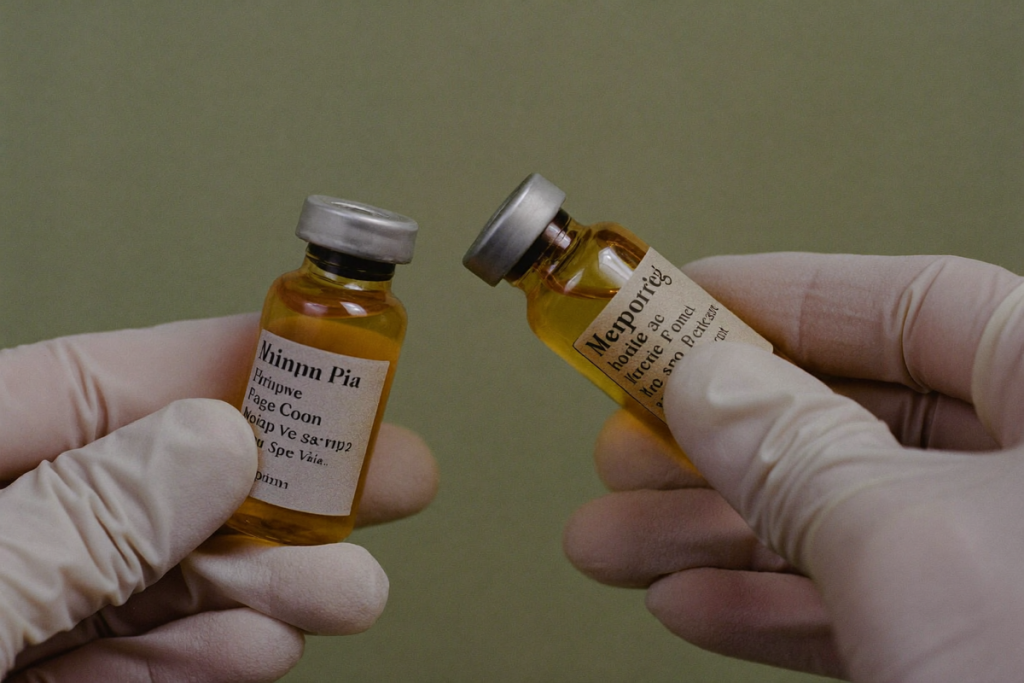
It is product quality, not the molecule’s pharmacology. The FDA has stated it is aware that compounders used food-grade NAD+ to make IV products and warned that food-grade ingredients are not suitable for sterile compounding without appropriate processing because of a high risk of microbial and endotoxin contamination. The agency reported adverse-event reports including severe chills, shaking, vomiting, and fatigue, some requiring medical treatment, consistent with excessive endotoxin levels (FDA compounding reminder).
This is not hypothetical. A lot of GenoGenix LLC NAD+ for Injection (100 mg/mL and 200 mg/mL, 10 mL vials, Lot GG121624-023) was voluntarily recalled on July 30, 2025 and classified by the FDA as Class I, the most serious recall level, on October 21, 2025, due to elevated endotoxin levels (FDA Class I recall summary). A Class I classification means the product may cause serious harm or death. This is why the source of a compounded injectable, and its sterility and endotoxin controls, matters at least as much as the dose.
Is compounded NAD+ injection FDA-approved?
No. Compounded NAD+ injection is not an FDA-approved drug. It is prepared by licensed 503A compounding pharmacies, requires a prescription, and its safety, quality, and efficacy have not been evaluated by the FDA (Empower Pharmacy). The regulatory status is also unsettled: the FDA proposed not to include NAD on the 503A bulk drug substances list, and the Pharmacy Compounding Advisory Committee recommended against it in 2017, citing the compound’s susceptibility to degradation from light, moisture, and temperature, plus inadequate clinical literature (Federal Register, 2019). None of this implies equivalence to an approved drug.
Who should be cautious or avoid NAD+ injections?
Per compounding-pharmacy labeling and provider guidance, NAD+ injection is generally not recommended during pregnancy or breastfeeding (no data), and individuals with active cancer are typically counseled not to use it as a precaution. Caution is advised with severe liver or kidney impairment, unstable cardiovascular disease, other significant systemic illness, and known hypersensitivity (Empower Pharmacy). These are label- and provider-based cautions, not contraindications derived from controlled trials, and the cancer caution in particular is theoretical and precautionary. A licensed provider should review your history, medications, and goals before any prescription. If you are exploring longevity protocols more broadly, you may also want to read about glutathione and how our evaluation process works. If what draws you to NAD+ is the appearance of your skin rather than a systemic effect, a topical route avoids the infusion-rate and sterility questions covered above entirely, since Revive’s NAD+ Face Cream is applied to clean skin instead of injected.
One practical safety note: new or severe chest pain or pressure, or a markedly racing heart during an infusion, warrants stopping the infusion and seeking medical attention. While the n=6 retrospective described chest pressure that resolved on completion, those sensations should never be minimized.
Frequently asked questions
Are NAD+ injection side effects dangerous?
Most reported infusion-related effects, such as flushing, nausea, cramping, and a racing heartbeat, were transient in the small studies available and tended to resolve when the infusion was slowed or completed. The more serious documented risk is contamination of poorly sourced compounded product, which the FDA has linked to severe chills, shaking, and vomiting and at least one Class I recall in October 2025. New or severe chest pain during an infusion should prompt stopping and getting medical help.
Why do I feel nauseous or flushed during an NAD+ drip?
These sensations appear to be linked to infusion speed. In a small 2026 retrospective chart review, all six NAD+ IV recipients reported symptoms like nausea, cramping, and flushing during faster infusions, which eased when the drip was slowed. The flushing is sometimes compared to the niacin flush, but that mechanism is documented for niacin, not proven for infused NAD+.
Does a slower infusion reduce side effects?
The available data suggest it may. A 2019 pilot delivering 750 mg over 6 hours to a small group of healthy men (8 receiving NAD+, plus 3 saline controls) recorded no adverse events, while a 2026 retrospective found NAD+ recipients had to slow their drips (averaging 97 minutes versus 37 minutes for nicotinamide riboside) because of symptoms. This points to rate as a key factor, though both studies were very small.
Is compounded NAD+ injection FDA-approved?
No. It is compounded, prescription-only, and not FDA-approved, and the FDA has not evaluated it for safety, quality, or efficacy. NAD was not placed on the FDA’s 503A bulk drug substances list, and an advisory committee recommended against it in 2017.
Can NAD+ injections be taken during pregnancy or with cancer?
Compounding-pharmacy labeling does not recommend NAD+ injection during pregnancy or breastfeeding because there is no data, and people with active cancer are typically counseled to avoid it as a precaution. These are provider- and label-based cautions; discuss your specific situation with a licensed clinician.
How can I lower the risk from a contaminated product?
Use a licensed provider and a pharmacy with documented sterility and endotoxin controls, since the most serious FDA-documented harms came from food-grade or contaminated product rather than the molecule itself. Avoid unsourced or non-prescription injectables entirely.
Considering NAD+ with proper oversight?
If you are exploring compounded NAD+, a licensed provider can review your health history, goals, and whether it is appropriate for you through an online assessment, with attention to sourcing, sterility, and slow administration.
Compounded NAD+ is prescription only and not FDA-approved; the FDA has not evaluated it for safety, quality, or efficacy. Educational information, not medical advice. Individual results vary.
Sources
- Grant R, et al. A Pilot Study Investigating Changes in the Human Plasma and Urine NAD+ Metabolome During a 6 Hour Intravenous Infusion of NAD+. Frontiers in Aging Neuroscience (2019). https://pmc.ncbi.nlm.nih.gov/articles/PMC6751327/
- Randomized, double-blind, placebo-controlled pilot of acute IV NR and NAD+ in healthy adults (preprint, not peer-reviewed). medRxiv (2024). https://www.medrxiv.org/content/10.1101/2024.06.06.24308565v1.full
- Real-world retrospective tolerability comparison of IV NAD+ versus nicotinamide riboside. Frontiers in Aging (2026). https://pmc.ncbi.nlm.nih.gov/articles/PMC12907335/
- U.S. FDA. FDA Reminds Compounders to Use Ingredients Suitable for Sterile Compounding. U.S. Food and Drug Administration. https://www.fda.gov/drugs/human-drug-compounding/fda-reminds-compounders-use-ingredients-suitable-sterile-compounding
- FDA Issues Class I Recall of NAD+ Injection Due to Elevated Endotoxin Levels. Pharmacy Learning Network / HMP Global (2025). https://www.hmpgloballearningnetwork.com/site/pln/news/fda-issues-class-i-recall-nad-injection-due-elevated-endotoxin-levels
- Gindri IM, et al. Evaluation of safety and effectiveness of NAD in different clinical conditions: a systematic review. Am J Physiol Endocrinol Metab (2024);326:E417-E427. https://journals.physiology.org/doi/full/10.1152/ajpendo.00242.2023
- Kamanna VS, et al. The mechanism and mitigation of niacin-induced flushing. Int J Clin Pract (2009). https://pmc.ncbi.nlm.nih.gov/articles/PMC2779993/
- Empower Pharmacy. NAD+ Injection (compounded, prescription-only). https://www.empowerpharmacy.com/compounding-pharmacy/nad-injection/
- U.S. FDA. Amendments to the List of Bulk Drug Substances That Can Be Used To Compound Drug Products Under Section 503A. Federal Register (2019). https://www.federalregister.gov/documents/2019/09/05/2019-18951/amendments-to-the-list-of-bulk-drug-substances-that-can-be-used-to-compound-drug-products-in