Glutathione Benefits: What the Evidence Supports, and Why Route Matters
June 13, 2026 · Longevity & Wellness
Medically reviewed by Diana Medina, PA-C, board-certified Physician Associate · Last reviewed June 14, 2026
Key takeaways
Glutathione is one of the body’s most abundant intracellular antioxidants and a cofactor in liver Phase II detoxification, which is why it is often called a “master antioxidant,” though it is not the only or strongest one.
Oral glutathione appears to be poorly and unreliably absorbed from single doses, with a single-dose animal study citing below 1% bioavailability; however, a 6-month randomized trial suggests chronic oral dosing may raise body stores, so “completely useless” overstates the evidence.
Injectable and IV routes bypass gut breakdown, but clinical evidence for treating specific diseases remains limited and mixed, and these compounded forms are not FDA-approved.
A 2019 FDA alert tied serious reactions in seven patients to contaminated, dietary-supplement-grade powder used for sterile injectables, which is a sourcing and quality failure rather than proof that therapeutic glutathione is inherently toxic.
Glutathione benefits center on two well-described biological roles: it is one of the body’s most abundant intracellular antioxidants, and it works as a cofactor in the liver’s detoxification machinery. Present inside cells at roughly millimolar concentrations, glutathione (often abbreviated GSH) helps neutralize reactive molecules and supports cellular redox balance, which is the reason it is frequently described as a “master antioxidant” in the published literature. That framing is useful but should be read carefully: glutathione is among the most abundant antioxidants, not the only one and not necessarily the strongest. This article reviews what the evidence reasonably supports, where it is uncertain, and why route of administration matters. It is educational information, not medical advice.
What is glutathione and why is it called the master antioxidant?
Glutathione is a small thiol-containing molecule (a tripeptide of cysteine, glutamate, and glycine) found in essentially every cell. Reviews note it is present at low-millimolar intracellular concentrations, which makes it one of the most abundant intracellular antioxidants and a central player in cellular redox defense according to NIH-indexed reviews. Its job is to help quench reactive oxygen species and to keep other antioxidant systems functioning. The “master antioxidant” nickname reflects this breadth, but it is shorthand, not a claim that glutathione outperforms every other protective molecule.
How glutathione supports liver detoxification
The liver clears many drugs, environmental chemicals, and reactive byproducts through a two-phase process. In Phase II, enzymes called glutathione S-transferases attach glutathione to reactive or electrophilic intermediates and xenobiotics, making them water-soluble so the body can excrete them in bile or urine. This conjugation step is the mechanistic basis for glutathione’s “detox” reputation as described in the detoxification literature. A clinically important illustration is acetaminophen. When acetaminophen is taken in excess, it generates a reactive metabolite called NAPQI that depletes hepatic glutathione. N-acetylcysteine (NAC), a glutathione precursor, is the standard antidote because it helps replenish that glutathione. In the landmark national multicenter study, hepatotoxicity developed in 6.1% of at-risk patients when oral NAC was started within 10 hours of ingestion, versus 26.4% when it was begun 10 to 24 hours after according to the New England Journal of Medicine study. That data shows glutathione’s clinical importance in detoxification, and it also shows protection is substantial but incomplete and strongly time-dependent. It is not “nearly 100% effective,” and that distinction matters.
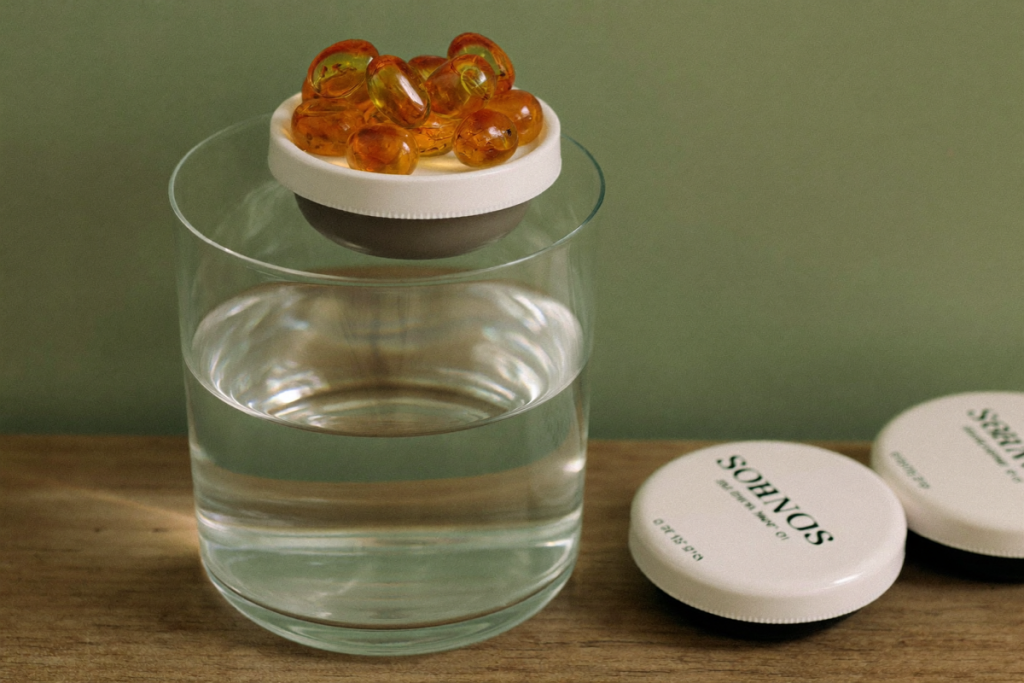
Oral glutathione is convenient but poorly and unreliably absorbed from single doses. This image is illustrative and not a product depiction.
Why is oral glutathione considered poorly absorbed?
The interest in injections and IV drips comes largely from a pharmacokinetic problem. After swallowing, glutathione is exposed to gamma-glutamyltransferase (GGT) and other gastrointestinal and first-pass enzymes that break it down before much intact molecule reaches the bloodstream. One analogue-development study reported native glutathione oral bioavailability of 0.7 plus or minus 0.1% in a single-dose animal (rat) model, used as the baseline against which synthetic analogues were benchmarked, in NIH-indexed pharmacokinetic work. That figure applies to acute single doses and should be attributed to that specific source rather than generalized.
The full picture is more nuanced than “oral does nothing.” A 6-month randomized controlled trial of oral glutathione at 250 mg or 1,000 mg per day (n=54) reported that the higher dose significantly raised body-compartment glutathione stores, on the order of roughly 30 to 35% in red blood cells and plasma according to the published trial. The fair conclusion is that oral glutathione is poorly and unreliably absorbed, especially from single doses, but consistent long-term dosing may raise stores over time. Some newer formulations are designed to improve uptake, and these comparisons describe relative formulation differences rather than absolute bioavailability percentages.
Oral vs injectable vs IV glutathione: how do the routes compare?
The table below summarizes commonly discussed differences. None of these routes is an FDA-approved treatment for a specific disease, and dosing should be determined by a licensed provider.
Route
How it enters the body
What the evidence suggests
Key considerations
Oral (capsule, liposomal, etc.)
Through the gut, where enzymes degrade much of it
Single-dose bioavailability cited below 1% in an animal study; a 6-month trial found chronic dosing raised body stores roughly 30 to 35% at the higher dose
Convenient and noninvasive; acute absorption is poor and variable; not a regulated drug for any disease
Injectable (intramuscular or subcutaneous)
Bypasses gut breakdown via injection
Avoids first-pass degradation; disease-specific clinical evidence is limited and mixed
Requires sterile technique and properly sourced, compounded product; compounded forms are not FDA-approved
Intravenous (IV)
Delivered directly into the bloodstream
A Parkinson’s pilot RCT found no significant benefit over placebo; broader disease evidence remains limited
Most invasive; contamination and dosing risks make medical supervision essential; not FDA-approved
The takeaway from the comparison is practical, not promotional. Injection and IV exist mainly to bypass the gut absorption bottleneck, not because they are proven to treat any particular condition. For IV specifically, a randomized, double-blind pilot in Parkinson’s disease (n=21, IV glutathione 1,400 mg three times weekly for four weeks) found no statistically significant benefit over placebo on standard rating scores according to the published pilot trial. Any wellness or antioxidant-support framing should stay modest and individualized.
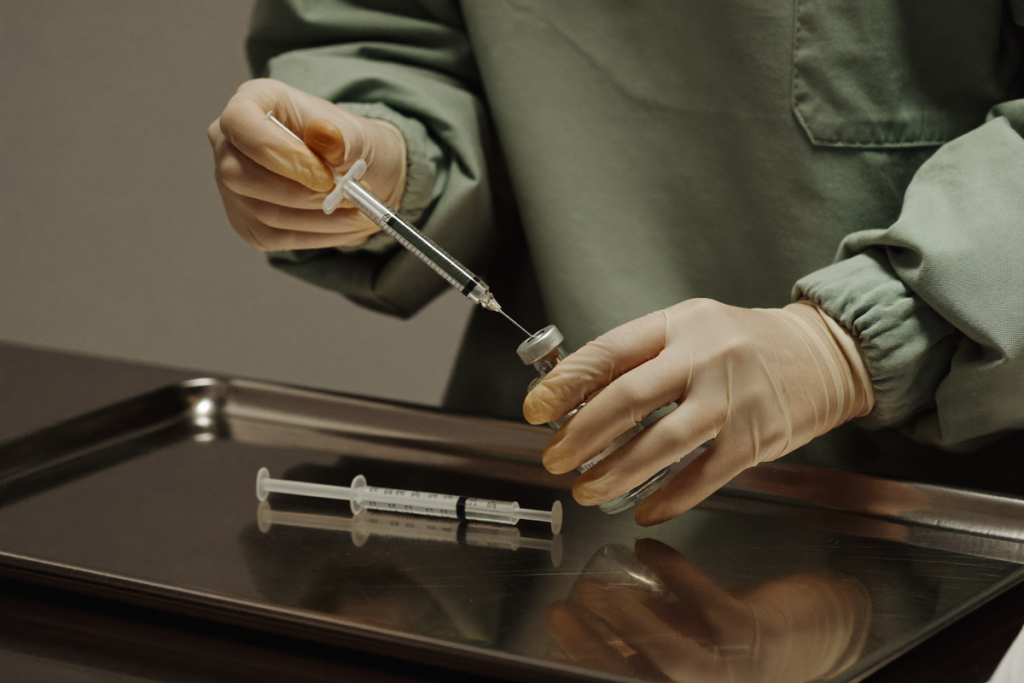
Sterile technique and properly sourced, pharmaceutical-grade product matter for any injectable. Illustrative image; dosing is provider-determined.
What are the side effects and safety risks of glutathione injections?
Reported risks of glutathione injections include injection-site reactions and, particularly with unregulated or cosmetic IV use, potential effects on the liver, kidneys, and nervous system, hypersensitivity or anaphylaxis, Stevens-Johnson syndrome, and infection or endotoxin reactions when sterile technique is poor or the product is contaminated. These are best understood as reported and possible risks tied largely to unregulated or improperly compounded use, with safe dosing established only under medical supervision. Anyone with a known glutathione or sulfur-compound sensitivity, anyone who is pregnant or breastfeeding, and anyone with significant liver, kidney, or immune conditions should be especially cautious and should only consider these products after a clinician’s individualized assessment.
The 2019 FDA glutathione warning, in context
On June 7, 2019, the FDA issued a compounding alert after seven patients at an outpatient clinic received IV injections of L-glutathione at 200 mg/mL (7 mL, or 1,400 mg each) and, within minutes, developed nausea, vomiting, lightheadedness, chills, body aches, and sneezing; one patient had low blood pressure and difficulty breathing and was hospitalized according to the FDA alert. FDA laboratory testing found the powder contained excessive bacterial endotoxin, with some results exceeding the acceptable limit. Crucially, the powder was labeled “Caution: Dietary Supplement” and should never have been used to compound sterile injectables. The root cause was contaminated, dietary-supplement-grade material, not evidence that therapeutic glutathione is inherently toxic at appropriate doses. This is exactly why pharmaceutical-grade sourcing, proper compounding, and sterile technique matter.
Is glutathione FDA-approved, and what about skin whitening?
Glutathione is not an FDA-approved drug. It has no USP monograph and is not a component of an FDA-approved product, so it can be compounded only under the section 503A framework and current enforcement-discretion policy under FDA compounding rules. In June 2022, the FDA Pharmacy Compounding Advisory Committee voted 8 to 5, with one abstention, to recommend adding glutathione to the 503A bulks list according to the advisory committee record. That vote is a non-binding recommendation, not an approval. It is also worth being precise about one common marketing point: a patient-specific prescription from a licensed prescriber is a baseline legal requirement of all traditional 503A compounding. It is inherent to the pathway, not a special safety feature unique to any one pharmacy or product.
On skin lightening, the position is clear. The FDA has not approved any injectable drug for skin whitening or lightening, and such products (which may contain glutathione, vitamin C, collagen, or other ingredients) are considered unapproved new drugs that carry risks including infection, blood clots, and transmission of infections like hepatitis and HIV. Revive Longevity does not prescribe glutathione for skin whitening or lightening.
Frequently asked questions
Is glutathione really the “master antioxidant”?
It is a reasonable shorthand. Glutathione is one of the body’s most abundant intracellular antioxidants and supports cellular redox defense, but it is not the only antioxidant and not necessarily the strongest. The label describes its broad role, not a ranking.
Why would someone consider injectable or IV glutathione instead of a pill?
Oral glutathione is poorly and unreliably absorbed from single doses because gut and first-pass enzymes break much of it down, with a single-dose animal study citing below 1% bioavailability. Injection and IV routes bypass that breakdown. They are not, however, proven treatments for any specific disease, and they are not FDA-approved.
Does oral glutathione do anything at all?
Possibly, with consistent use. A 6-month randomized trial reported that daily oral dosing raised body glutathione stores by roughly 30 to 35% at the higher dose, so “completely useless” overstates the evidence. Acute single-dose absorption remains poor.
Is glutathione FDA-approved?
No. Glutathione has no USP monograph and is not part of an FDA-approved drug, so compounded glutathione exists only under the 503A framework and enforcement discretion. A 2022 advisory committee recommended adding it to the bulks list, but that recommendation is non-binding and is not the same as approval.
What did the 2019 FDA glutathione warning actually say?
The FDA reported that seven patients had serious reactions after IV glutathione, and lab testing found the powder contained excessive endotoxin exceeding the acceptable limit. The powder was dietary-supplement-grade material that should not have been used for sterile injectables. It was a contamination and sourcing failure, not proof that glutathione itself is toxic at therapeutic doses.
Glutathione at Revive Longevity
If you want to know whether glutathione fits your situation, you can start with a short online assessment. A licensed provider reviews your information and determines whether glutathione is appropriate for you. Compounded and injectable glutathione is not FDA-approved for these uses, and this page is educational information rather than a treatment recommendation.
Pizzorno J. Glutathione! Integr Med (Encinitas). 2014. NIH/PMC review on glutathione as a primary intracellular antioxidant and Phase II detoxification cofactor. pmc.ncbi.nlm.nih.gov/articles/PMC4684116
Smilkstein MJ et al. Efficacy of Oral N-Acetylcysteine in the Treatment of Acetaminophen Overdose. N Engl J Med. 1988. Hepatotoxicity 6.1% when NAC started within 10 hours vs 26.4% at 10 to 24 hours. pubmed.ncbi.nlm.nih.gov/3059186
Analogue-development study (single-dose rat pharmacokinetics): native glutathione oral bioavailability 0.7 plus or minus 0.1% as the baseline for synthetic analogues due to GGT hydrolysis and GI and first-pass degradation. pmc.ncbi.nlm.nih.gov/articles/PMC11945201
Richie JP Jr et al. Randomized controlled trial of oral glutathione supplementation on body stores of glutathione. Eur J Nutr. 2015. 6-month oral dosing (250 or 1,000 mg/day, n=54) raised body stores roughly 30 to 35% at the higher dose. pubmed.ncbi.nlm.nih.gov/24791752
Hauser RA et al. Randomized, double-blind, pilot evaluation of intravenous glutathione in Parkinson’s disease. Mov Disord. 2009. n=21, 1,400 mg IV three times weekly for four weeks; no significant benefit vs placebo (P=0.32). pubmed.ncbi.nlm.nih.gov/19230029
FDA Compounding Alert (June 7, 2019): Concerns with using the dietary ingredient glutathione to compound sterile injectables; seven patients, 1,400 mg IV each, endotoxin exceeding the acceptable limit; no FDA-approved injectable for skin lightening. fda.gov
FDA: Bulk Drug Substances Used in Compounding Under Section 503A of the FD&C Act. Patient-specific prescribing is inherent to all 503A compounding; glutathione is not an FDA-approved drug. fda.gov
Which areas of your health are you looking to improve?
Select all that apply.
Just a few details so we can recommend the right next step.
We'll route you to the best fit and follow up with personalized guidance.

 Medically reviewed by Diana Medina, PA-C, board-certified Physician Associate · Last reviewed June 14, 2026