Does Tirzepatide Cause Cancer? What the Evidence Shows
June 13, 2026 · Weight Loss
Medically reviewed by Diana Medina, PA-C, board-certified Physician Associate · Last reviewed June 14, 2026
Key takeaways
The thyroid C-cell tumor warning on FDA-approved tirzepatide (Mounjaro and Zepbound) comes from rat studies; the labels state plainly that it is unknown whether tirzepatide causes these tumors in humans.
A personal or family history of medullary thyroid carcinoma (MTC) or MEN 2 is an absolute contraindication — disclose this to your provider before starting.
Human data so far are limited but not alarming: no MTC cases have been reported in completed tirzepatide trials, though follow-up is short. A large GLP-1 cohort found no substantial thyroid-cancer increase — but that study did not include tirzepatide.
Pancreatic cancer is not a labeled warning; acute pancreatitis is, at low trial rates. The honest answer is that human cancer risk remains unestablished — individual results vary.
Does tirzepatide cause cancer? The most accurate answer the evidence supports is: it is not known. FDA-approved tirzepatide (sold as Mounjaro and Zepbound) carries a boxed warning for thyroid C-cell tumors, but that warning is based on rodent studies, and the labels themselves state it is unknown whether tirzepatide causes these tumors in humans. No medullary thyroid carcinoma cases have been reported in completed tirzepatide trials, though follow-up is limited. This article walks through exactly what the FDA labels, clinical trials, and pharmacovigilance data say — and where the honest answer remains “unestablished.”
What does the FDA label actually warn about?
Both Mounjaro and Zepbound carry a boxed warning — the FDA’s most prominent warning — about the risk of thyroid C-cell tumors, including medullary thyroid carcinoma (MTC). The crucial wording, taken verbatim from the label, is this: “It is unknown whether MOUNJARO causes thyroid C-cell tumors, including medullary thyroid carcinoma (MTC), in humans as the human relevance of tirzepatide-induced rodent thyroid C-cell tumors has not been determined.”
In other words, the warning exists because of what was seen in animals, and the label is careful not to claim the risk has been proven in people. It is a flag for caution, not a finding of human harm.
Where did the cancer warning come from?
The signal originated in animal carcinogenicity testing. According to the Zepbound label, in a 2-year carcinogenicity study in rats, tirzepatide caused a dose-dependent and treatment-duration-dependent increase in thyroid C-cell tumors (adenomas and carcinomas) at clinically relevant exposures. These are rodent findings — they describe what happened in rats given the drug for two years, not what has been observed in humans.
Why does this distinction matter so much? Because of a well-documented difference between species.
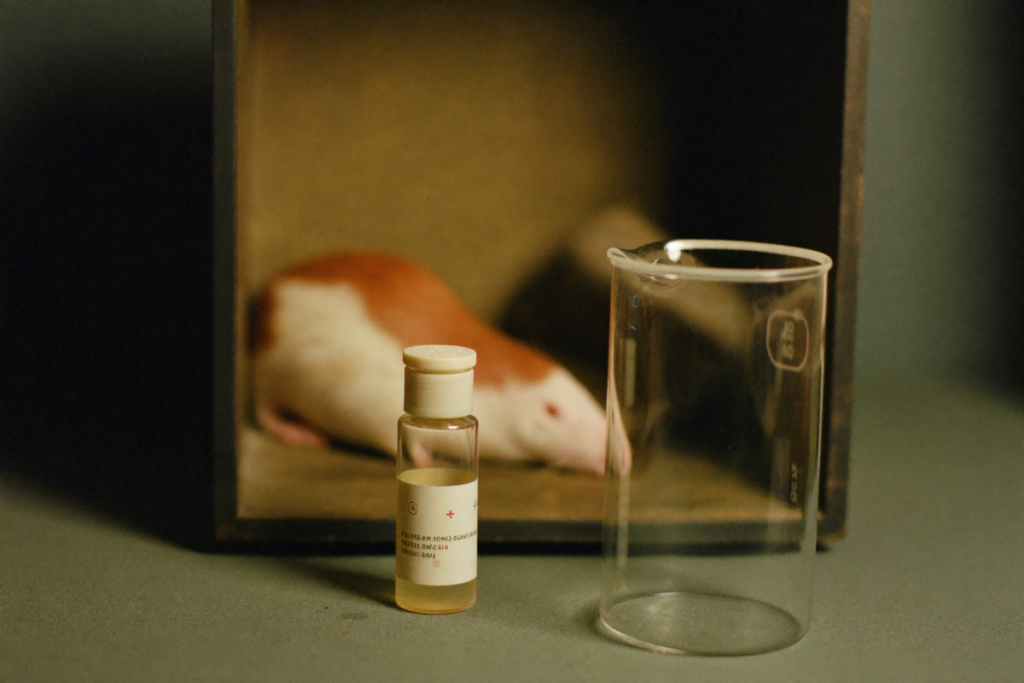
The thyroid tumor warning originates in rat studies; the FDA label says the human relevance has not been determined.
Why might rodent findings not apply to humans?
A foundational mechanistic study by Bjerre Knudsen and colleagues (Endocrinology, 2010) examined how GLP-1 receptor agonists act on thyroid cells. In rodents, thyroid C-cells carry abundant GLP-1 receptors, and stimulating them drives calcitonin release and C-cell proliferation. In humans and cynomolgus monkeys, those same C-cells express GLP-1 receptors at low levels (often barely detectable), and the agonists did not trigger calcitonin release in primates.
That marked species difference is the leading reason rodent C-cell tumors may not translate to people. But the same authors were explicit that the long-term consequences in humans “remain unknown.” This is the heart of the matter: the biology offers a plausible reason for reassurance, not proof of safety. It is worth noting tirzepatide is a dual GIP/GLP-1 receptor agonist; much of this mechanistic work was done on GLP-1 agonists specifically.
What do human studies show so far?
Human evidence is best described as limited but, to date, not alarming — with important caveats.
Tirzepatide trials: No cases of MTC or other C-cell disease have been reported in the completed tirzepatide clinical program. However, FDA labeling notes the trial database is of insufficient size and exposure duration to definitively assess thyroid (or any specific) cancer risk. Absence of cases in a relatively short, finite program is not the same as proof of no risk.
The largest GLP-1 cohort: A Scandinavian cohort study (BMJ, 2024) compared 145,410 GLP-1 receptor agonist users with 291,667 DPP-4 inhibitor users across Denmark, Norway, and Sweden (mean follow-up 3.9 years). It found no substantial increase in thyroid cancer (hazard ratio 0.93, 95% CI 0.66–1.31), with the upper confidence bound consistent with no more than roughly a 31% relative increase. Critical caveat: that study examined GLP-1 receptor agonists (predominantly liraglutide and semaglutide, plus dulaglutide, exenatide, and lixisenatide) — not tirzepatide, which was not yet available during the study period. Its reassurance applies to those GLP-1 drugs and cannot simply be transferred onto tirzepatide.
Pharmacovigilance signals: Disproportionality analyses of the FDA Adverse Event Reporting System (FAERS) have flagged a thyroid-cancer reporting signal for tirzepatide — but these were based on very few events. FAERS relies on voluntary, spontaneous reports, has no control group or denominator, and is influenced by media attention. It can suggest an association to investigate; it cannot establish that tirzepatide causes thyroid cancer.
How does the evidence compare across data sources?
Source
Type / population
What it shows
What it cannot tell us
FDA label (rat study)
2-year carcinogenicity study in rats
Dose- and duration-dependent thyroid C-cell tumors in rats
Whether this happens in humans (human relevance “not determined”)
Bjerre Knudsen 2010
Mechanistic, rodents + monkeys + in vitro
Rodent C-cells respond; primate/human C-cells largely do not
Long-term human outcomes (“remain unknown”)
Tirzepatide trials
Phase 3 (diabetes & obesity)
No MTC cases reported
Long-term risk — database too small/short
Scandinavian cohort (BMJ 2024)
Human cohort, 145,410 GLP-1 users
No substantial thyroid-cancer increase (HR 0.93)
Anything about tirzepatide — not included
FAERS analyses
Spontaneous human reports
A reporting signal exists (few events)
Causation — no control group
A personal or family history of MTC or MEN 2 is a contraindication; share it with your provider before starting.
Who should not take tirzepatide?
Per the FDA labels, tirzepatide is contraindicated in anyone with a personal or family history of MTC, or with Multiple Endocrine Neoplasia syndrome type 2 (MEN 2). If that applies to you or a close relative, tell your provider — this is a hard stop, not a judgment call. The label also notes that routine monitoring of serum calcitonin or use of thyroid ultrasound is of uncertain value for early detection of MTC in people on tirzepatide, so it does not endorse screening labs as a reliable safety net. Any new neck mass, trouble swallowing, persistent hoarseness, or shortness of breath should be reported promptly.
What about pancreatic cancer?
This is a frequent point of confusion. The tirzepatide labels carry an acute-pancreatitis precaution — not a pancreatic-cancer warning. In trials, adjudicated acute pancreatitis occurred at low rates that were broadly similar to comparators (rare, with adjudicated cases in well under 1% of participants, and comparable to placebo in pooled obesity studies). Trials did not establish an increase in pancreatic cancer, and it is not a labeled warning. So the honest framing is that a pancreatic-cancer concern with tirzepatide is not established — and pancreatitis and pancreatic cancer should not be conflated.
How does compounded tirzepatide differ from the FDA-approved versions?
Compounded tirzepatide is a different category. It is not FDA-approved and has not been reviewed by the FDA for safety, quality, or efficacy. The FDA has received numerous adverse-event reports involving compounded GLP-1 drugs, including dosing errors, hospitalizations, and deaths. The boxed thyroid warning, contraindications, and label cautions discussed here were written for the approved products; compounded versions are made outside that FDA review process. For broader context on this drug class, see our guides to tirzepatide side effects and tirzepatide vs semaglutide.
One regulatory note for accuracy: the FDA removed tirzepatide from its drug shortage list in October 2024, and declared the semaglutide shortage resolved on February 21, 2025; large-scale compounding wind-down deadlines fell by spring 2025. Compounding under current rules is permitted only in specific, individualized circumstances determined by a licensed provider and pharmacy.
Frequently asked questions
So, does tirzepatide cause cancer or not?
The evidence does not allow a definitive yes or no. FDA-approved tirzepatide carries a thyroid C-cell tumor warning based on rat studies, and the labels state it is unknown whether tirzepatide causes these tumors in humans. No MTC cases have been reported in completed trials, but follow-up is limited. The accurate answer today is that human cancer risk is unestablished.
Why is there a cancer warning if it’s only based on rats?
Regulators apply a precautionary boxed warning when an animal carcinogenicity signal appears, even when human relevance is uncertain. The 2-year rat study showed thyroid C-cell tumors, so the warning flags that possibility while the labels acknowledge the human relevance “has not been determined.”
Does the Scandinavian study prove tirzepatide is safe for the thyroid?
No. That cohort (HR 0.93, 95% CI 0.66–1.31) found no substantial thyroid-cancer increase, but it studied GLP-1 receptor agonists (predominantly liraglutide and semaglutide, plus dulaglutide, exenatide, and lixisenatide), not tirzepatide. Its reassurance cannot be imported onto tirzepatide, which is a different (dual GIP/GLP-1) agonist.
I have a family history of thyroid cancer. Can I take tirzepatide?
A personal or family history of medullary thyroid carcinoma (MTC), or MEN 2, is an absolute contraindication on the FDA labels. Disclose this to your provider; tirzepatide is not appropriate in that situation. Other types of thyroid disease should also be discussed individually with a clinician.
Does tirzepatide cause pancreatic cancer?
That is not established. The labels warn about acute pancreatitis (an inflammatory condition), which occurred at low rates in trials, not pancreatic cancer. Pancreatitis and pancreatic cancer are different, and a pancreatic-cancer link has not been demonstrated in the trial program.
Is compounded tirzepatide held to the same safety standard?
No. Compounded tirzepatide is not FDA-approved and is not reviewed by the FDA for safety, quality, or efficacy. The thyroid warning and other label cautions were written for the approved products. Any decision should be made with a licensed provider who can review your history.
Talk to a licensed provider about tirzepatide
Curious whether a GLP-1 approach fits your health goals and history? Start an online assessment and a licensed provider can review your medical background — including any thyroid history — and discuss whether treatment is appropriate for you.
Revive’s tirzepatide is a compounded medication. It is not FDA-approved, is prescription only, and has not been evaluated by the FDA for safety, quality, or efficacy. This article is educational information, not medical advice. No outcomes are promised; individual results vary. Tirzepatide is contraindicated with a personal or family history of MTC or MEN 2.
U.S. FDA / Eli Lilly. Mounjaro (tirzepatide) Prescribing Information — boxed warning, contraindications, acute pancreatitis adverse reactions, calcitonin/ultrasound note. DailyMed. https://dailymed.nlm.nih.gov/dailymed/fda/fdaDrugXsl.cfm?setid=d2d7da5d-ad07-4228-955f-cf7e355c8cc0
U.S. FDA / Eli Lilly. Zepbound (tirzepatide) Prescribing Information — 2-year rat carcinogenicity study; acute pancreatitis adverse reactions; indications. DailyMed. https://dailymed.nlm.nih.gov/dailymed/fda/fdaDrugXsl.cfm?setid=487cd7e7-434c-4925-99fa-aa80b1cc776b
Pasternak B, et al. Glucagon-like peptide 1 receptor agonist use and risk of thyroid cancer: Scandinavian cohort study. BMJ (2024). https://pmc.ncbi.nlm.nih.gov/articles/PMC11004669/
Disproportionality analysis of tirzepatide adverse events in the FDA Adverse Event Reporting System (FAERS). PMC (2024). https://pmc.ncbi.nlm.nih.gov/articles/PMC11473560/
Eli Lilly. FDA Approves Lilly’s Zepbound (tirzepatide) for Chronic Weight Management. Investor news release (2023). https://investor.lilly.com/news-releases/news-release-details/fda-approves-lillys-zepboundtm-tirzepatide-chronic-weight
Eli Lilly. FDA approves Zepbound (tirzepatide) as the first and only prescription medicine for moderate-to-severe obstructive sleep apnea in adults with obesity. Investor news release (Dec 20, 2024). https://investor.lilly.com/news-releases/news-release-details/fda-approves-zepboundr-tirzepatide-first-and-only-prescription
U.S. FDA. FDA’s Concerns with Unapproved GLP-1 Drugs Used for Weight Loss. FDA.gov. https://www.fda.gov/drugs/postmarket-drug-safety-information-patients-and-providers/fdas-concerns-unapproved-glp-1-drugs-used-weight-loss
Foley & Lardner LLP. GLP-1 Drugs: FDA Removes Semaglutide from Drug Shortage List (Feb 21, 2025). https://www.foley.com/insights/publications/2025/02/glp-1-drugs-fda-removes-semaglutide-from-drug-shortage-list/
Which areas of your health are you looking to improve?
Select all that apply.
Just a few details so we can recommend the right next step.
We'll route you to the best fit and follow up with personalized guidance.


 Medically reviewed by Diana Medina, PA-C, board-certified Physician Associate · Last reviewed June 14, 2026