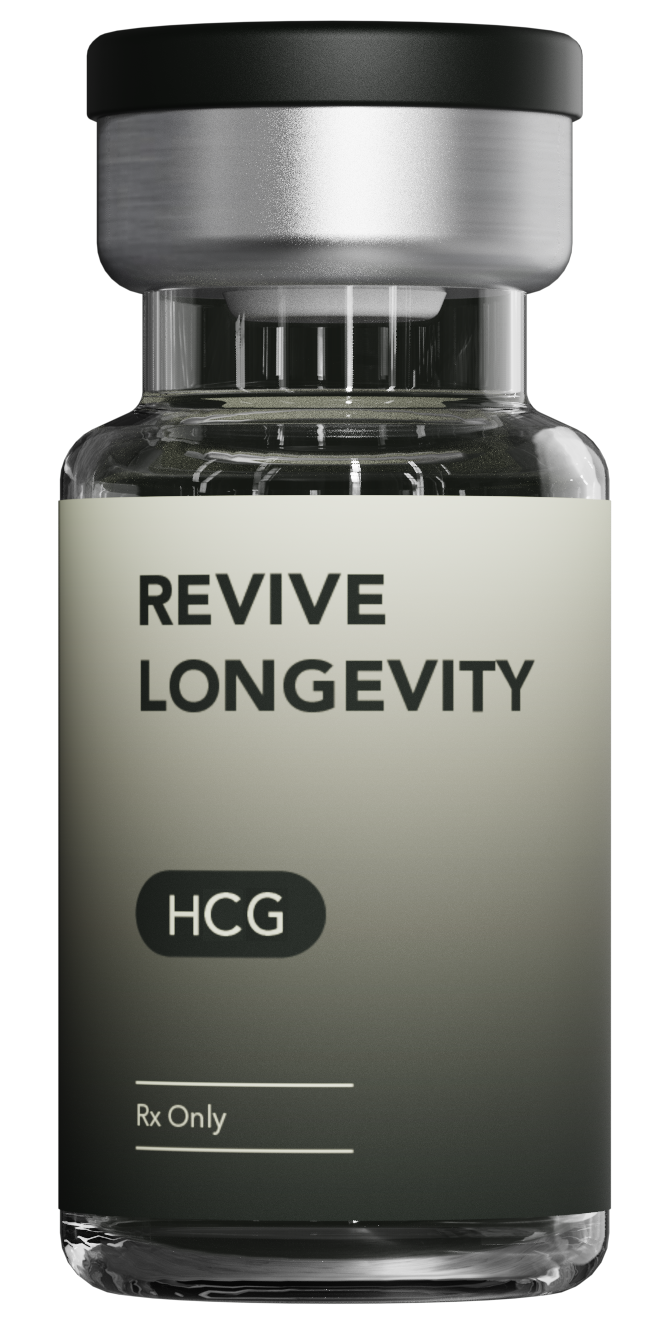
HCG

Hormonal Support & Physiological Balance
HCG is used in specific hormone-related protocols to support the body’s natural hormone signaling pathways. It is often incorporated alongside other therapies to help maintain physiological balance and support long-term hormonal health. All use is physician-guided and tailored to the individual’s clinical profile.
Subscription Plan $299 / every 4 weeks
Get Started →

Card is authorized after plan selection; you are not charged until a licensed provider approves your plan.

Don’t know your BMI? Calculate it here

A Deeper Look Inside HCG

What is HCG?

Human Chorionic Gonadotropin (HCG) is a hormone that mimics luteinizing hormone (LH) and stimulates the gonads to produce sex hormones. HCG is used in two primary clinical contexts: to restore ovulation in women with certain fertility conditions, and to stimulate endogenous testosterone production in men; either as standalone therapy for secondary hypogonadism or alongside testosterone replacement therapy to preserve testicular function and fertility. HCG is administered by subcutaneous or intramuscular injection. Dosing, frequency, and duration are determined by your provider based on the clinical indication, labs, and treatment goals. Compounded HCG is not FDA-approved. FDA-approved HCG products include Pregnyl®, Novarel®, and Ovidrel® (recombinant). Compounded HCG is prepared by state-licensed compounding pharmacies under Section 503A of the Federal Food, Drug, and Cosmetic Act. HCG is not FDA-approved for weight loss; the FDA has specifically warned against marketing HCG as a weight-loss product. A valid prescription from a licensed healthcare provider is required. Not all applicants qualify. Individual results vary.

The Science

HCG is a glycoprotein hormone produced during pregnancy that is structurally similar to luteinizing hormone (LH). In men, HCG binds to LH receptors on testicular Leydig cells and stimulates endogenous testosterone production; making it useful in secondary hypogonadism, as an adjunct to TRT to preserve testicular size and fertility, and for men recovering from suppressed HPG (hypothalamic-pituitary-gonadal) axis function. In women, HCG is used to trigger ovulation in the context of assisted reproduction and ovulation induction.

In TRT combination therapy, HCG maintains intratesticular testosterone production, which exogenous testosterone alone suppresses. This can help preserve testicular volume and spermatogenesis for men who want to maintain fertility while on TRT. Treatment parameters and monitoring should be directed by a licensed provider.

Important Safety Information
Tap to read ▾

Warning: Ovarian Hyperstimulation, Thrombosis, and Multiple Gestation

In fertility use, HCG may cause ovarian hyperstimulation syndrome (OHSS), arterial or venous thromboembolism, and multiple gestation. HCG is contraindicated in pregnancy.

Do not use HCG if you:

  • Are pregnant (HCG is contraindicated except under fertility protocols)
  • Have had a prior serious allergic reaction to HCG
  • Have precocious puberty (pediatric use only)
  • Have known or suspected sex-hormone-dependent cancers
  • Have active thromboembolic disorder
  • Have uncontrolled thyroid or adrenal dysfunction

Tell your provider before starting HCG if you:

  • Have a history of cancer (especially breast, ovarian, testicular, prostate)
  • Have cardiovascular disease, heart failure, migraines, or epilepsy
  • Have kidney or liver disease
  • Have asthma or a seizure disorder
  • Have a history of blood clots
  • Are on TRT (HCG is often co-prescribed to maintain fertility)

Common side effects may include: injection-site reactions, headache, irritability, fatigue, restlessness, fluid retention, breast tenderness (men and women), acne.

Serious but less common risks may include: ovarian hyperstimulation syndrome (with fertility use), arterial or venous thromboembolism, multiple gestation (fertility use), gynecomastia (men), and severe allergic reactions.

This is not a complete list of side effects or contraindications. Compounded HCG is not FDA-approved. HCG is not FDA-approved for weight loss. Talk to a licensed healthcare provider before starting or continuing HCG therapy.

How Revive Longevity Works

0

Submit Your Application

Complete a short online wellness quiz so we can understand your goals, health history, and what’s right for you.

0

Connect with a Licensed Provider

A healthcare provider reviews your information to determine if you qualify for prescription medication. No waiting rooms, no hassle.

0

Begin Your Wellness Journey

If approved, your medication ships directly to your door in as little as 1–2 days; with ongoing support to keep you on track.

Why members choose Revive

Provider-reviewed plans

Every plan is reviewed by a licensed healthcare provider before medication is dispensed.

Medical oversight
Shipped to your door

Medication arrives in discreet packaging on a consistent schedule; no pharmacy trips required.

Delivery
Help between doses

Reach your care team with questions about dosing, side effects, or your progress; support is part of the program.

Support
Transparent monthly pricing

One flat rate covers your plan. No surprise fees, no insurance runaround.

Pricing

Frequently Asked Questions

What is HCG used for at Revive Longevity?

At Revive, HCG is prescribed to men to stimulate endogenous testosterone production; either as standalone therapy for secondary hypogonadism or alongside TRT to preserve testicular function and fertility. HCG is not prescribed here for weight loss; the FDA has warned against that off-label use.

Exogenous testosterone suppresses the body’s own LH signaling, which shuts down testicular testosterone production and spermatogenesis. HCG mimics LH and keeps the testes active; which can preserve testicular size, fertility, and natural testosterone responsiveness during TRT.

HCG is given as a subcutaneous or intramuscular injection, typically 1 to 3 times per week depending on your provider’s protocol. Dosing is individualized based on labs, goals, and concurrent therapies.

HCG has been used clinically for decades. Long-term use in men typically focuses on monitoring labs (testosterone, estradiol, hematocrit) and symptoms. Your provider will establish a follow-up schedule to adjust therapy as needed.

Complete our online health assessment, share any recent testosterone or fertility-related labs, and connect with a licensed provider. If HCG is appropriate for you, your plan and medication ship directly.